

Most of us have sat at home waiting for a service visit. The company said someone would show up between 8 a.m. and noon. You moved a meeting, kept the dog inside, and looked out the window every time a truck drove by. Around 11:40 you started to wonder if they’d forgotten you.
By the time the technician knocks, the customer is already a little annoyed, and the work hasn’t even started.
For plumbers, cleaners, HVAC techs, movers and anyone else who works at a customer’s door, the wait is part of the service. It’s often the part people remember most, and it’s one of the easiest parts to fix.
The Wait Feels Longer Than the Job
A two-hour repair can feel quick. A four-hour arrival window feels endless. Waiting comes with nothing to do and no information, and it’s hard to plan around something you can’t see.
Most of the frustration isn’t really about time. People will wait if they know what’s going on. What wears them down is not knowing. Is the crew coming at 9 or at 12? Will anyone tell them if the plan changes?
So you don’t have to rebuild your whole schedule to make the wait better. You just have to close the information gap.
Narrow the Window Where You Honestly Can
Wide windows exist for good reasons. Jobs run long, traffic backs up, and a simple fix turns into a part that has to be picked up across town. Promising an exact time you can’t keep is worse than giving a wide one.
Still, plenty of businesses hand out the same four-hour block for every booking out of habit. Look at how your days actually run. If the first job of the morning almost always starts on time, tell that customer 8 to 9 instead of 8 to 12. If afternoons are less predictable, keep those windows wider and say why.
Even tightening a few windows a day makes a real difference to the people on the other end.
Tell People When You’re on the Way
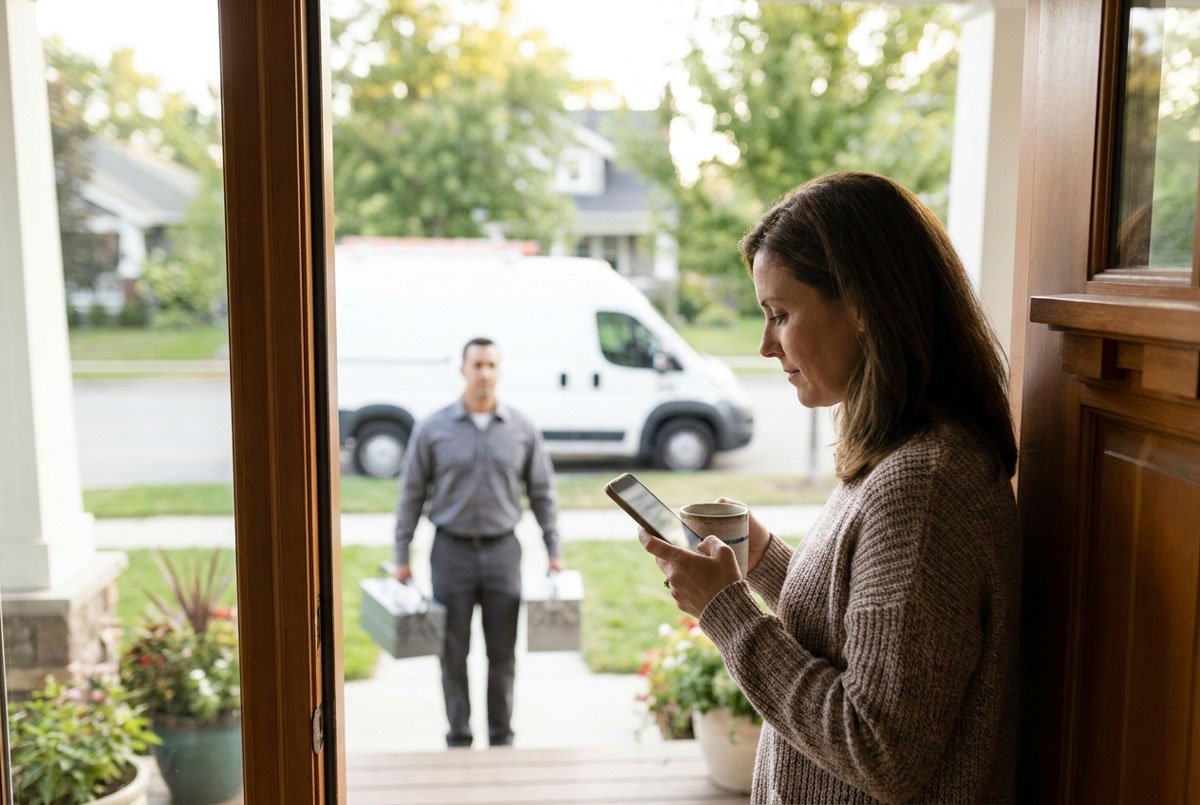
The most useful message a service business can send is a short heads-up when the crew leaves for the job. Something like: “Hi Sarah, it’s Mike from the plumbing company. I’m heading your way now and should be there in about 25 minutes.”
That one text changes the customer’s whole morning. They can finish a call, put the dog out back, or move the car out of the driveway. They stop watching the street.
Some businesses go a step further and text the customer a live map of the tech on the way, the way a ride-share app does. The customer can watch the truck get closer and doesn’t need to call the office to ask where it is. That also means fewer “just checking on my appointment” calls for whoever is answering the phone.
Running Late? Say So Early
Every business runs late sometimes. What customers judge is how you handle it.
If a job runs over, let the next customer know as soon as you realize it, not when you’re already half an hour behind. Give a new estimate, apologize once, and keep it short. Most people are fine with a delay they were told about. Very few are fine with one they had to discover by waiting.
If the delay is long enough that the customer might rather reschedule, offer that plainly. Some will take you up on it. Many won’t, and they’ll still appreciate being asked.
Make the Arrival Easy for Your Crew, Too
Good communication isn’t only for customers. A tech who already knows the gate code, where to park and whether there’s a dog in the yard gets to work faster and makes a better first impression.
Ask for those details when the job is booked, and make sure they reach the person driving to the house. A note that says “park on the street, side gate is unlocked” saves a few minutes at every stop, and those minutes add up over a day.
Why It Shows Up Later
Customers rarely write about the repair itself unless something went wrong. They write about how the visit felt. “They told me exactly when they’d be here.” “The tech texted when he was on his way.” “They let me know they were running behind.”
Read through the reviews of almost any well-rated local service company and you’ll find comments like these. They’re the moments people notice, because so many businesses skip them.
That makes arrival communication one of the cheapest ways to earn better word of mouth. It doesn’t take new equipment or more staff. It takes a few well-timed messages.
The Takeaway
Walk through what your customers go through between booking the job and hearing the knock on the door. Is the window as narrow as it can honestly be? Do they hear from you when the crew heads out? Do they find out about delays before they have to ask?
Fix those three things and the wait stops being the worst part of the visit. Often it turns into the part they mention when they recommend you to a neighbor.